
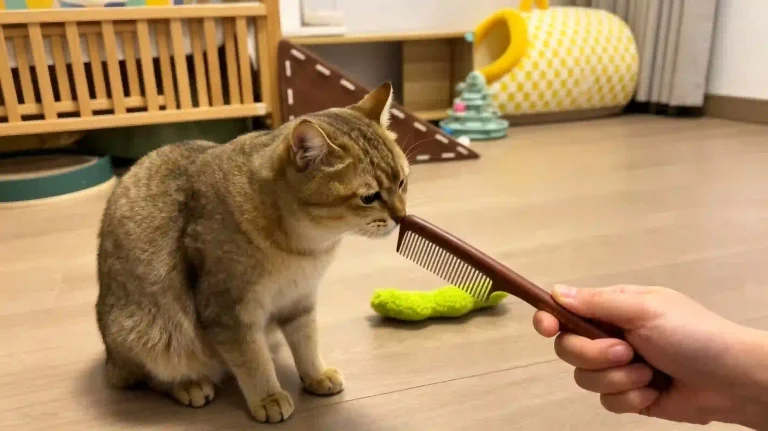
If you want to groom your cat gently and successfully, the very first step is helping them get familiar with the brush. Start by placing it nearby so your cat can sniff it and realize it’s harmless. Rub it gently against their body so it picks up their scent. If possible, rub it near their scent glands around their cheeks—once the brush smells like them, their brain registers it as friendly and safe instead of something to fear.
Next, use the handle of the brush to gently stroke them. We’re not actually brushing fur yet; we’re just making them feel comfortable so they realize this tool brings a nice sensation. With a little patience, this method really works—look, even my cat milo lets me brush him now!
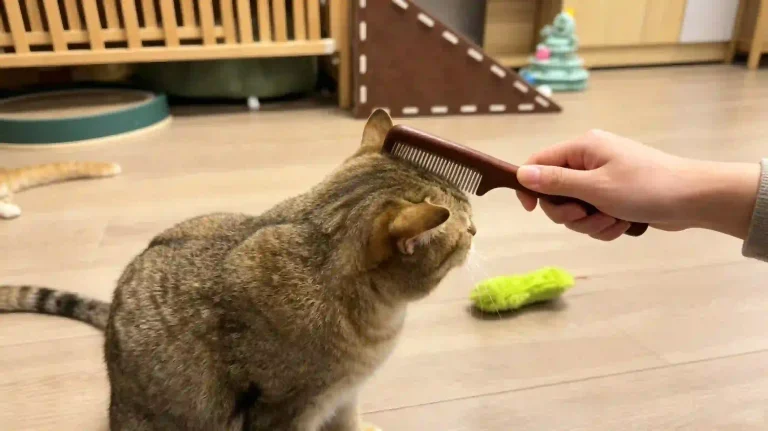
Once your cat stays relaxed for a while, you can change your angle and try engaging the bristles to brush a bit deeper into the coat. Don’t force the comb all the way through to the skin in one pull, as tugging through tangles will cause discomfort and make them want to run. As long as they aren’t resisting, keep going gently. Once they trust that this routine won’t hurt, you can eventually hold them in your lap while brushing.
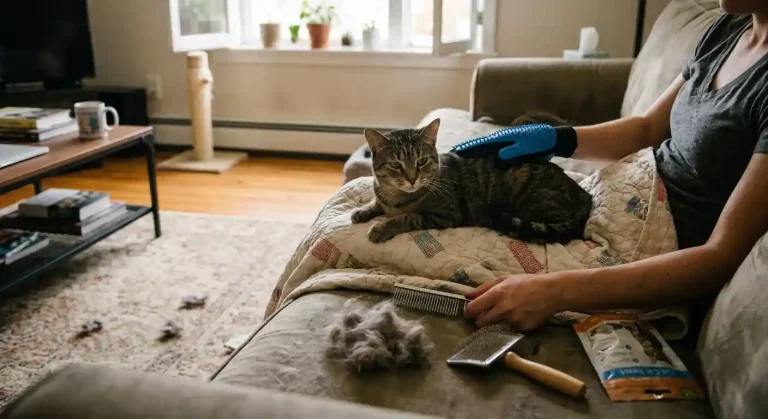
A good brush makes a huge difference. It cleans out loose undercoat, stray litter particles, and trapped lint, leaving them feeling much cleaner and more comfortable.
Here is my usual brushing order: I always start with the top of the head. Brushing the head and the back of the neck mimics the feeling of a mother cat grooming them. Normally, I’d use my free hand to gently hold their cheeks to brush both sides of their face—cats find this super soothing and will often lean right into it
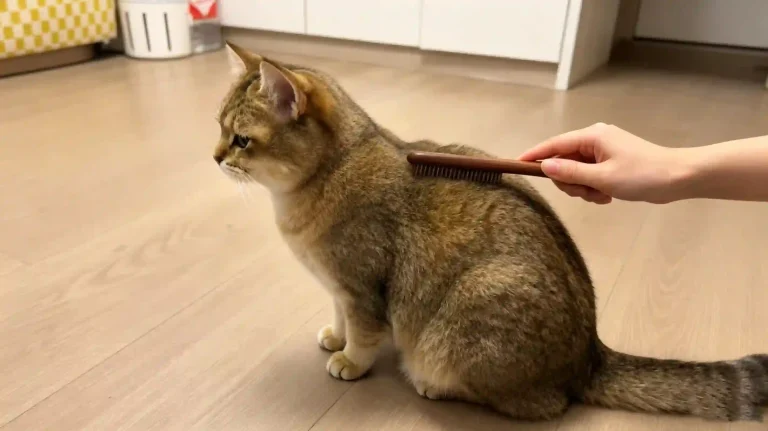
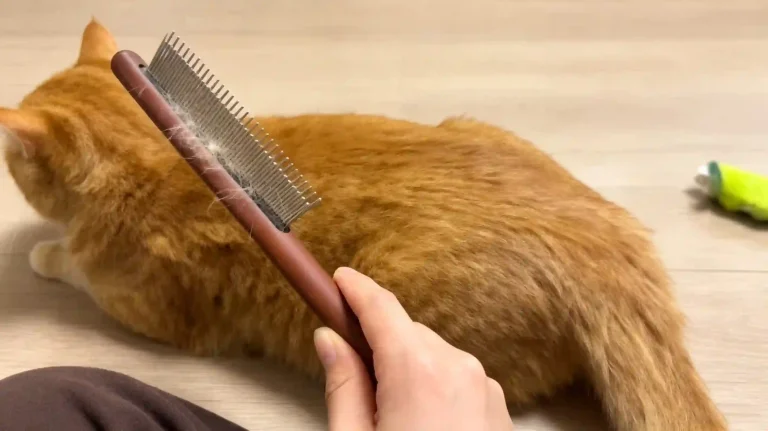
After the head and cheeks, I move to the back, using light strokes. A brush with varied tooth lengths glides in easily and lifts out loose fur without pulling healthy hair—cats are sensitive and will run off if you yank on healthy fur. After working down the spine, I move to the sides, and then pay extra attention to the area near the base of the tail.
Of course, I didn’t get my cats to be this well-behaved overnight. It took time and patience to build that mutual trust. The same goes for brushing their belly. Instead of angling the brush teeth directly into the coat—which can snag and cause discomfort—gently smooth over the belly area lightly. This way, they won’t resist, and you can clean both the inner and outer coat.
When your cat is relaxed, you can also gently brush around their hindquarters to collect even more loose fur. Over time, you’ll gather enough loose hair to roll into a massive fur ball, and you’ll notice way less hair floating around your home. Lately, I’ve barely found any loose fur in their cat beds or room corners, and there’s almost nothing left to sweep up during daily cleaning because I brush them out every evening. If you want a house with less cat hair, regular brushing is the secret!